
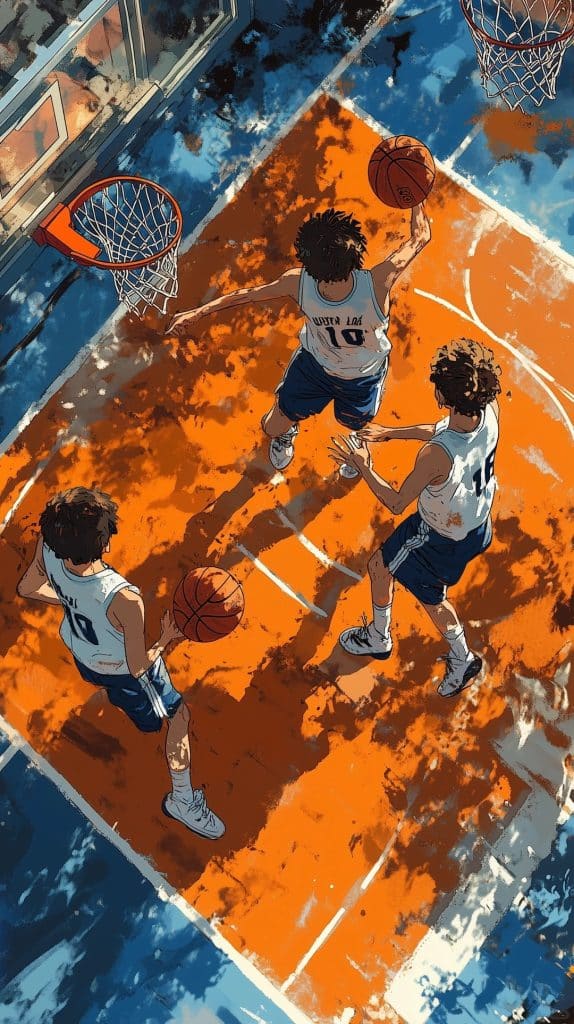
You stop abruptly and jump for a shot on the basketball court, and as you land, you hear a “clunk” sound from your feet—that’s not the sound of a successful shot, but your feet protesting! At this point, you might think, “But these are the latest shoes!” But the problem might lie with an often-overlooked supporting player: the insole.
That’s right, that “sponge” you thought was just for absorbing sweat. In reality, modern basketball insoles play three crucial roles:
Anti-Torsion
When you change direction to dribble past an opponent, your foot twists like wringing out a towel. Ordinary insoles will twist along with your foot, but professional anti-torsion insoles have a rigid material in the middle (usually TPU or carbon fiber), acting like an anti-roll bar on a car chassis, preventing excessive twisting.
Extreme Cushioning
When you jump and land, your knees bear an impact force 6-7 times your body weight. Professional cushioning insoles use non-Newtonian fluid materials or high-rebound foam, like adding a spring mattress to a concrete floor, maximizing the reduction of impact on your feet. Interestingly, the heavier you are, the “harder” it works; the harder you land, the more “effort” it puts in. That’s truly “smart equipment”!
Lateral Support
When moving laterally on the court, your foot subtly “drifts” inside the shoe—until it hits the side of the shoe. Insoles with strong lateral support have three-dimensional protective wings or reinforced sides, like a guardrail system for your feet. This not only improves movement precision but also prevents your foot from “skidding” inside the shoe during sudden stops.
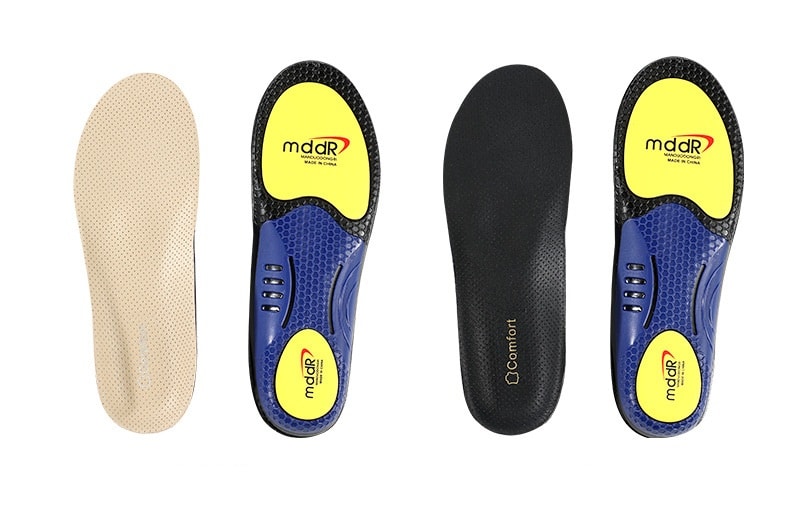
So, the next time you pay for an expensive pair of basketball shoes, take a look at the insoles. A good basketball insole provides your feet with comprehensive protection. After all, on the basketball court, every step you take deserves a better “ground support system”!