
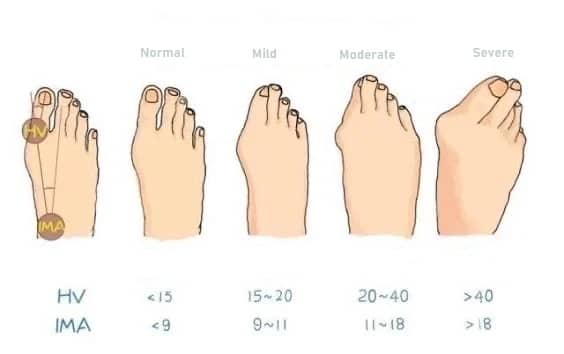
Bunions, also known as hallux valgus, are a common foot problem. They typically manifest as the big toe deviating outwards and the first metatarsal bone protruding. This not only affects appearance but can also cause pain, unsteady gait, and even impact knee and lower back health. In daily management, bunion insoles are a relatively gentle and easy-to-use auxiliary method, but only if the support is adequate.
First, arch support is fundamental.
Many bunion problems are accompanied by fallen arches. Once the arch loses support, the pressure on the forefoot increases significantly, making the big toe more likely to be “pushed” outwards. Suitable bunion insoles provide stable support to the medial longitudinal arch, helping to distribute pressure and return the foot to a normal weight-bearing state.
Second, forefoot support must be precise.
Bunions primarily occur in the forefoot area. High-quality insoles will have cushioning and support structures under the first metatarsal bone, reducing excessive pressure in this area and preventing the forefoot from “spreading,” thus reducing the tendency of the big toe to deviate outwards.
Third, the big toe should be guided, not forcibly corrected.
It’s important to note that the function of the insole is to “guide” and “mitigate,” not to forcibly correct. A reasonable bunion insole will provide a space for the big toe to return inwards through soft medial support, making it easier for the body to accept long-term wear.
Fourth, heel stability cannot be ignored.
Many people only focus on the forefoot but neglect the heel. If the heel is unstable, pronated, or supinated, the gait will be unbalanced, and the bunion problem will be exacerbated. Therefore, the heel cup of the insole should usually have a certain degree of containment to help stabilize the heel and improve overall walking stability.
Finally, comfort determines adherence.
Even the best support design is difficult to use long-term if it’s uncomfortable. Bunion insoles should strike a balance between support and softness, providing functionality without affecting daily walking experience.
In summary, the key to bunion insoles is not “hard correction,” but rather scientific support, reasonable pressure distribution, and consistent use. Choosing the right insoles and combining them with good shoe-wearing habits can truly help your feet walk more comfortably.